

Bat Exclusions
Contact Us
Bat Exclusions By Expest Wildlife Control
Bats play an important role in Georgia’s ecosystem by controlling flying insect populations. A single bat can eat hundreds of mosquitoes in just one hour—consuming nearly half its body weight in insects each night. They also help reduce agricultural pests like moths and beetles, making them a natural form of pest control.
In the wild, bats typically roost in caves, hollow trees, or beneath loose bark. However, when these natural habitats aren’t available, they may take shelter inside buildings, attics, or homes. If bats begin roosting in unwanted areas, the safest and most effective solution is bat exclusion. This process involves installing a one-way device that lets bats exit safely but prevents them from re-entering. Once all bats have left, the entry points are sealed to keep them out permanently.
Bat exclusion should never be performed between May 1 and August 15, as this is when young bats are still flightless. Additionally, because bats can carry rabies, it’s important to avoid handling them and to contact trained wildlife control professionals for assistance.
Through proper bat exclusion, you can protect both your property and Georgia’s valuable bat population.
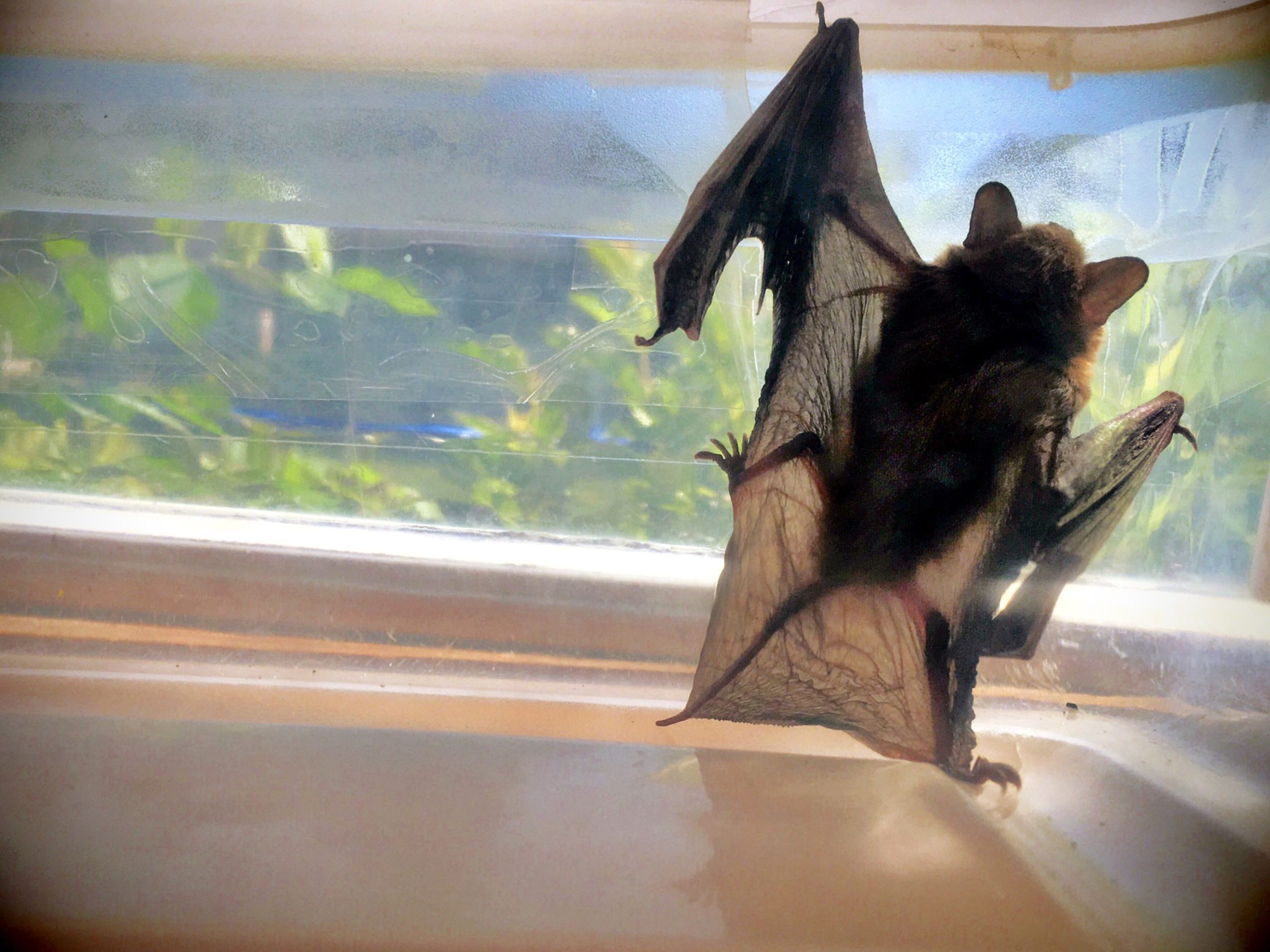
In nature, bats pose little threat to humans. However, bats will bite when first captured and handled or if trapped inside. Resident species of bats in the United States are capable of being infected with rabies, but the incidence of rabies is the same as in other mammals. Bat guano is extremely dangerous to your health and could be fatal if bats continue to live inside your home.
At Expest Exterminating we specialise not only in bat exclusions, but also comprehensive wildlife control services to protect your attic, chimney and roofline from unwanted invaders. If you’re hearing rustling in your attic or seeing droppings around vents, our team also offers professional squirrel removal and rodent control solutions to address the full spectrum of wildlife issues. Because bats and rodents can carry serious health risks like rabies and histoplasmosis, it’s important to act quickly and schedule a full inspection and exclusion plan today
HEALTH HAZARDS ASSOCIATED WITH BAT DROPPINGS
The most serious health risks arise from disease organisms that can grow in the nutrient-rich accumulations of droppings and debris under a roost particularly if roosts have been active for years. External parasites also may become a problem when bats leave roosts. The parasites then can invade buildings and bite people.
Histoplasmosis
Histoplasmosis is caused by a fungus that can affect both humans and animals. The disease is transmitted to humans by airborne fungus spores from soil contaminated by the droppings of birds and bats. The soil under a roost usually has to have been enriched by droppings for two years or more for the disease organism to reach significant levels. Although almost always associated with soil, the fungus has been found in droppings (particularly from bats) alone, such as in an attic.
The incidence of histoplasmosis being transmitted from bat droppings to humans is not thought to be high. Nevertheless, fresh bat droppings (unlike fresh bird dropping) can contain the histoplasmosis fungus. Bat droppings do not need to come into contact with soil to be a source of the disease.
Infection occurs when spores, carried by the air are inhaled especially after a roost has been disturbed. Most infections are mild and produce either no symptoms or a minor influenza- like illness. On occasion, the disease can cause high fever, blood abnormalities, pneumonia and even death. The National Institutes of Health (NIH) has reported a potentially blinding eye condition presumed ocular histoplasmosis syndrome (OHS) that probably results from the fungus. NIH estimates that 4 percent of those exposed to the disease are at risk of developing OHS.
Rabies From Bats
Rabies is a dangerous, fatal disease, but only about 5 percent of bats submitted for testing are infected with the rabies virus. In recent years, there has been increased concern about the risk of rabies transmission following contact with bats. If an injured or ill bat is found in or around a structure, it should be removed by a professional, because most bats will try to bite when handled.
Ticks, mites and other parasites
Bat roosts can harbor parasites that may invade buildings. Although these parasites can bite and irritate, they are unlikely to transmit diseases to humans. The northern fowl mite and chicken mite are usually the main culprits. Other parasites that may cause problems inside buildings include the pigeon nest bug and the bat bug (both related to the beg bug), soft ticks, biting lice and the pigeon fly. Although most parasites associated with bird or bat roosts die quickly after the birds or bats leave, some may live for several weeks.
Droppings under a roosting area can breed flies, carpet beetles and other insects that may become major problems in the immediate area. These pests may fly through open windows or crawl through cracks to enter buildings. If bats are discouraged from roosting around buildings, most of the parasites associated with them will soon die. If the pests are a problem after bats have been excluded, the roost area may be treated with a residual insecticide by a pest management professional labeled for control of fleas, ticks, mites and similar pests.
During the removal and cleanup of bat droppings, workers should follow strict precautions to minimize risk from disease organisms in the droppings.
Bat Facts
Often referred to as Mouse-eared Bats, this genus — Myotis — comes from the Greek words mys (mouse) and otis (ear), describing the long, pointed, leaf-like projection inside the ear that distinguishes these bats.
Size: These small to medium-sized bats range from 3.1 to 3.7 inches in total length.
Color: Their coloration varies by species, from dark yellowish brown to gray.
Identifying Features: The tragus — a small projection extending from the base of the inner ear — is long and pointed, rather than blunt or rounded. All Mouse-eared Bats have simple, unmodified snouts and tails that reach the end of the membrane between their hind legs. This membrane is never thickly furred. Many species are difficult to tell apart, even for experts.
Breeding: Mating occurs in late autumn, and females typically give birth to 1–2 pups in May or June. Some species form large “maternity colonies” of several hundred individuals, remaining together until the young can fly independently—usually within 3–5 weeks after birth. Sexual maturity is reached within 1–2 years, depending on the species.
Habitat and Behavior: During the summer, Mouse-eared Bats roost in caves, old mine shafts, hollow trees, buildings, and beneath loose bark. Some species are very particular about their roosting sites. For hibernation, they may travel up to 300 miles to find suitable caves or abandoned mines. In warmer regions, certain species stay active year-round.
These bats feed primarily over water sources and forest edges, consuming insects such as mayflies, moths, beetles, and mosquitoes. The Little Brown Myotis can live up to 30 years, one of the longest lifespans known for any bat species. Like all bats, they use echolocation to navigate and hunt in darkness.
Because these bats sometimes roost in attics, wall voids, or chimneys, homeowners may occasionally face infestations that require professional removal. At Expest Exterminating, we provide safe and humane bat exclusion services to remove colonies without harm. Our team also offers squirrel removal, rodent control, and other wildlife control solutions to keep your home protected from unwanted intruders year-round.
If you suspect bats or other wildlife activity in your attic, schedule a full property inspection with our experienced technicians to ensure a safe, long-term solution.
Choose One Of Our Convenient Pest Control Packages

EXPEST SILVER PACKAGE
Pest Control
- Alternate Month Perimeter Treatment
- 1 Year Service Agreement
- No Set-Up Fees
EXPEST GOLD PACKAGE
Pest & Mosquito Control
- Alternate Month Perimeter Treatment
- Monthly Seasonal Mosquito Treatment
- 1 Year Service Agreement
- No Set-Up Fees
EXPEST PLATINUM PACKAGE
Pest, Mosquito, & Termite Control
- Alternate Month Perimeter Treatment
- Monthly Seasonal Mosquito Treatment
- Advanced Termite Bait System Installation and Monitoring
- 1 Year Service Agreement
- No Set-Up Fees
Frequently Asked Questions About Bat Exclusion
1. What is a bat exclusion?
Bat exclusion is a humane process used to remove bats from homes or buildings. It involves sealing off all possible entry points and installing one-way devices that let bats exit safely but prevent re-entry. This ensures the colony leaves without harming the bats or your property.
2. Are bats a protected species?
Yes. In most states, bats are protected wildlife because they play a vital role in controlling insect populations. It’s illegal to harm or kill them. That’s why professional bat exclusion — not trapping or poisoning — is the only approved method for removing bats.
3. What are the common signs of a bat infestation?
You might notice fluttering sounds at dusk, droppings (guano) near entry points or attic floors, strong ammonia-like odors, or greasy marks around rooflines or vents. Seeing bats fly from your roofline at sunset is another clear indicator.
4. How does the bat exclusion process work?
Professionals first inspect the structure to identify all entry and exit points. Then they install one-way exclusion devices over the active openings, allowing bats to leave but not return. Once the colony is out, all holes, vents, and cracks are sealed to prevent future infestations.
5. How long does the bat exclusion process take?
The process typically takes 2–7 days, depending on the size of the colony, structure complexity, and weather conditions. Maternity season (usually late spring to mid-summer) can affect timing, as exclusions are paused when baby bats can’t yet fly.
6. Is attic cleanup necessary after bats are removed?
Yes. After an exclusion, professional attic cleanup and sanitation are essential. Bat guano can harbor fungi that may cause respiratory issues such as histoplasmosis. Cleaning also helps remove lingering odors and prevents secondary pest infestations.
7. Is bat exclusion safe for my home and family?
Absolutely. Professional bat exclusion is designed to be non-toxic, humane, and environmentally safe. Technicians use specialized materials that don’t damage your roof, vents, or attic spaces while ensuring bats and your family remain unharmed.
8. How much does bat exclusion cost?
Costs vary depending on the building size, level of infestation, and accessibility. On average, homeowners can expect to spend between $400 and $1,500. A detailed on-site inspection is usually needed to provide an accurate estimate.
What Our Customers Have to Say About Expest
-

“I’ve been working with Tim and Expest for many years and two houses. They are professional, responsive, thorough, and honest. I have had serious issues, as well as the routine, and I have found the service and the pricing to be the definition of value. And they will never steer…